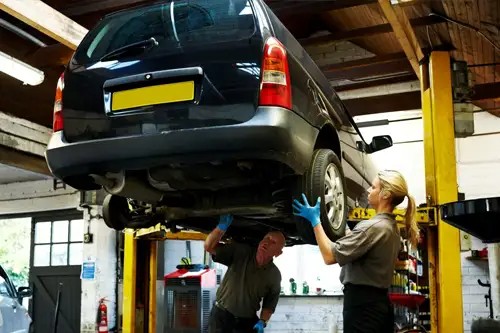

We check tyres every day at our Bedford workshop and the number of vehicles that roll in with dangerously underinflated tyres never stops surprising us. We’re not talking borderline low. We’re talking tyres running 15–20 PSI below where they should be, on cars whose drivers had no idea anything was wrong.
The reason? Most drivers don’t know when they’re supposed to check tyre pressure, let alone how often.
This guide answers that question clearly, from the perspective of IRTE-accredited technicians who work on cars, vans, and HGVs in Bedford day in, day out. We’ll also cover what you’re actually looking for, what incorrect tyre pressure costs you, and the one mistake almost everyone makes when they do check.
The Short Answer
Check your tyre pressure at least once a month and always before a long journey. Do it when your tyres are cold: before you’ve driven, or after the vehicle has been parked for at least two to three hours.
That’s the rule. Everything below explains why it matters more than most drivers realise.
Why Tyre Pressure Matters More Than You Think
Tyres are the only part of your vehicle in contact with the road. Their pressure directly affects braking, steering, handling, fuel economy, and tyre lifespan. When that pressure is wrong in either direction everything degrades.
According to TyreSafe, over half the tyres on Britain’s roads are underinflated, with 35% of tyres being driven at least 8 PSI below the manufacturer’s recommendation. The same organisation estimates that £1 billion worth of fuel is wasted in the UK every year as a direct result of underinflated tyres. That’s money coming straight out of your pocket at every fill-up, caused by a five-minute check you didn’t do.
The safety picture is starker still. In 2023, 190 people were killed or seriously injured in collisions related to defective tyres — a figure on a par with mobile phone-related incidents. This isn’t a fringe problem.
When Exactly Should You Check Tyre Pressure?
Every month — without exception
The standard advice from every major motoring authority the AA, RAC, TyreSafe, and vehicle manufacturers — is once a month. Tyres naturally lose around 2 PSI per month even with no damage, so monthly checks are the minimum needed to stay on top of it.
The honest reality is most drivers check far less frequently. Research by the AA and TyreSafe, surveying over 22,000 UK motorists, found that while 96% of drivers claimed to know how to check tyre pressure, only 30% had actually checked it in the previous week. A fifth of drivers had never checked their tyre pressure at all.
Before any long journey
If you’re heading out on a motorway run or a long trip, check before you go. Not just because low pressure is more dangerous at speed but because you want to catch any slow puncture before you’re stuck on the hard shoulder fifty miles from home.
After a sudden drop in temperature
Cold weather reduces tyre pressure. As a rule of thumb, pressure drops approximately 1 PSI for every 10°C fall in temperature. When the first real cold snap hits in autumn, tyre pressures across the country quietly drop overnight and TPMS warning lights start appearing on dashboards everywhere. Don’t wait for the light. Check when the seasons change.
After hitting a pothole or kerb
Bedford roads like most UK roads take their toll on tyres. A significant pothole impact can cause a slow puncture or internal tyre damage without any visible external sign. If you’ve hit something hard, check the pressure of all four tyres before your next journey.
When the vehicle has been loaded heavily
Carrying extra passengers, towing a trailer, or loading up a van for a job changes the weight your tyres are carrying. Most vehicles have a separate recommended pressure for heavy loads check your door placard or handbook and adjust accordingly before setting off.
When the TPMS warning light comes on
Modern vehicles manufactured after 2014 are fitted with a Tyre Pressure Monitoring System (TPMS) by law. If the warning light appears on your dashboard, one or more of your tyres has dropped below the safe threshold. Don’t ignore it and don’t assume it’ll sort itself out. Pull over safely when it’s appropriate to do so, check the pressures, and add air if needed.
One important note: TPMS is a safety net, not a replacement for regular manual checks. The system only alerts you when pressure has already dropped significantly. By the time it fires, your tyres have been underinflated for a while.
The Most Important Rule: Check When Cold
This is where most people go wrong. If you drive to a petrol station specifically to check your tyre pressure, you’ve already undermined the accuracy of the reading.
When tyres are driven, the air inside them heats up and expands. A tyre that reads the correct pressure after a twenty-minute drive may actually be underinflated when cold. The RAC’s guidance on checking tyre pressure is clear: always check when the tyres are cold before you’ve driven that day, or after the vehicle has been stationary for at least two to three hours.
If your nearest air pump is at a petrol station a mile away, driving there is fine it won’t significantly warm the tyres. But if you’ve already done thirty minutes on the motorway, wait until the next day.
How to Find the Right Pressure for Your Vehicle
Every vehicle has a manufacturer-recommended tyre pressure, and it isn’t the same as the maximum pressure printed on the tyre sidewall (ignore that number for this purpose). Your recommended pressures are found:
- On the placard inside the driver’s door frame this is the most convenient place and where we always look first
- In your vehicle handbook
- Near the fuel filler cap on some vehicles
Note that front and rear tyres often require different pressures. Many vehicles also have a different (higher) recommended pressure when fully loaded check both figures and use the right one for how you’re driving.
Pressure is measured in PSI (pounds per square inch) or BAR most gauges and air pumps display both. Cars typically run between 28 and 36 PSI, though this varies. Vans and load-carrying vehicles are often higher.
What Incorrect Tyre Pressure Actually Does to Your Car
It’s worth spelling this out, because the consequences go beyond a vague sense of “it’s not ideal.”
Underinflation causes the tyre sidewalls to flex more than they should on every rotation. This generates heat, accelerates tyre wear across the inner and outer edges, increases rolling resistance (costing you fuel), reduces braking performance, and if severe enough can lead to a blowout. Underinflated tyres are also a common cause of MOT failures and are checked as part of our brake and tyre services in Bedford.
Overinflation reduces the contact patch between tyre and road, meaning less grip, a harsher ride, increased wear down the centre of the tread, and greater vulnerability to damage from potholes or road debris.
Either way, your tyres wear faster and your fuel economy suffers. And either way, your braking distances increase the thing you most need to trust when something unexpected happens on the road.
Don’t Forget the Spare
Most drivers never check the spare tyre until the moment they actually need it. By then it’s often flat, borderline flat, or well past its useful life. Check your spare at least every few months it needs the same attention as the other four.
Quick Reference: When to Check Tyre Pressure
| Situation | Action |
|---|---|
| Regular maintenance | Once a month, when cold |
| Before a long journey | Always check before setting off |
| After a cold snap | Check all four tyres |
| After hitting a pothole | Check all four tyres |
| Heavy load or towing | Adjust to loaded pressure setting |
| TPMS warning light | Check immediately when safe to do so |
| Vehicle unused for weeks | Check before driving |
| Spare tyre | Check every 3 months |
When to Come to Us
A monthly pressure check will catch most issues early. But some problems need more than air. Come and see us at our Bedford workshop if:
- One tyre loses pressure noticeably faster than the others this usually points to a slow puncture or a faulty valve
- Your tyre pressure warning light keeps coming back on after you’ve inflated the tyres
- You can see visible damage bulges, cuts, cracking, or objects embedded in the tread
- Your tyres are wearing unevenly (more on the inside or outside edge, or a bald strip down the centre)
- Your vehicle pulls to one side, even with correct pressure this can indicate a wheel alignment or balance issue
We offer tyre inspection, pressure checks, puncture repair, and replacements as part of our full car service in Bedford. We also check tyres during every MOT test and will let you know if anything needs attention before it becomes a bigger problem.
FAQs
How often should tyre pressure be checked?
At least once a month, plus before any long journey. Tyres naturally lose around 2 PSI per month, so monthly checks are the minimum needed to stay at the correct pressure.
What is the best time of day to check tyre pressure?
First thing in the morning is ideal before you’ve driven anywhere that day, so the tyres are fully cold and the reading is accurate.
Can I check tyre pressure when the tyres are warm?
You can, but the reading will be higher than the actual cold pressure, which makes it easy to unknowingly underinflate the tyre. Always check cold for accuracy.
Does cold weather affect tyre pressure?
Yes. Tyre pressure drops roughly 1 PSI for every 10°C fall in temperature. Pressures that were correct in summer may be low by winter. Check after any significant temperature drop.
Where can I find the recommended tyre pressure for my car?
Check the sticker on the inside of the driver’s door frame, your vehicle handbook, or near the fuel filler cap. Don’t use the maximum pressure printed on the tyre sidewall that is not the recommended operating pressure.
Does my TPMS mean I don’t need to check manually?
No. TPMS is a useful safety backup but it only alerts you once pressure has already dropped significantly. Manual monthly checks catch gradual loss before it triggers the warning light.
Is it free to check tyre pressure?
Many petrol stations have free or low-cost air pumps. You can also buy a digital tyre pressure gauge for under £15 to check at home. If you’d rather have it done properly, bring your vehicle to our Bedford workshop and we’ll check all four tyres for you.